Audit trail Exportable log

NABH dietary compliance with a record for every diet order and every tray

NABH accreditation asks hospitals to show that each patient's diet is planned and served as ordered, and that food is handled safely. MedMeals applies each diet to the menu, confirms every delivery at the bed and keeps exportable logs that support your NABH documentation.

Diet order
On the patient's record
Diet change
Logged and alerted
Delivery
OTP-confirmed at the bed
Export
For NABH and internal audits

What NABH expects from dietary services

NABH's accreditation standards treat nutrition as part of patient care. The Care of Patients chapter expects patients to be screened for nutritional risk, those found at risk to be assessed further, and the therapeutic diet to be planned and provided collaboratively. Related expectations cover educating patients and families about diet, and kitchen sanitation and safe food handling.

In practice, that means a trail an assessor can follow. The diet follows the treating doctor's order, a qualified dietitian assesses patients where required, the kitchen handles food safely, and each step is documented. On paper, that trail is spread across case files, diet registers and kitchen slips, and assembling it before an assessment is slow and error-prone.

Accreditation is earned by hospitals, not software, and your quality team should always work from the current NABH standards. What MedMeals changes is the evidence: the dietary part of the trail is built while your teams work.
How MedMeals supports NABH documentation

MedMeals does not replace your policies, your dietitians or your infection control program. It records the dietary steps they carry out, in one place, as they happen.

  • Diet orders on the patient's record

    The diet, texture, allergies and diet cycle sit on the patient's digital record, with the full history kept from admission to discharge.

  • Diets enforced at every order

    Every ordering channel works from the patient's filtered menu. An item that breaks the diet or contains a recorded allergen is never offered, so the tray matches the order.

  • A dietitian assigned from admission

    Each admission, whether synced from HIMS or entered at the desk, gets an assigned dietitian and a diet setup step, so it is clear who owns each patient's nutrition from the first meal.

  • Diet changes logged and alerted

    Each diet change is recorded against the patient, and kitchen and nursing get a real-time alert so the next meal follows it.

  • Delivery and clearance confirmed

    A delivery OTP confirms each tray reached the right patient, and a second OTP confirms clearance. QR scans record each status change on the way.

  • Diet compliance reports

    Meal reports cover diet compliance, consumption and meals served by ward, diet or period, ready for quality reviews.

  • Exportable audit logs

    Orders, diet changes, deliveries and transactions are logged, and the logs export for NABH and internal audits.

  • Access by role

    Granular role-based access means dietitians, kitchen, nursing, admin and billing staff see and change only what they should, with full audit logs.

An audit trail built while you work

  1. Step 1: The diet is ordered

    The treating doctor's diet order goes on the patient's record, and the assigned dietitian sets the diet, texture, allergies and cycle.

  2. Step 2: The menu applies it

    Every ordering channel shows only items that fit the diet, so compliance does not rely on memory at the bedside or the counter.

  3. Step 3: The kitchen prepares to it

    KOTs and meal cards name the diet, bed and ward, so each tray is built to the order.

  4. Step 4: Delivery is confirmed

    A delivery OTP at the bed and a clearance OTP afterwards close the loop, and each step is logged as it happens.

  5. Step 5: Evidence is exported

    Before an assessment or internal audit, the quality team exports logs and compliance reports instead of pulling registers from every ward.

One definition for every diet, on every ward

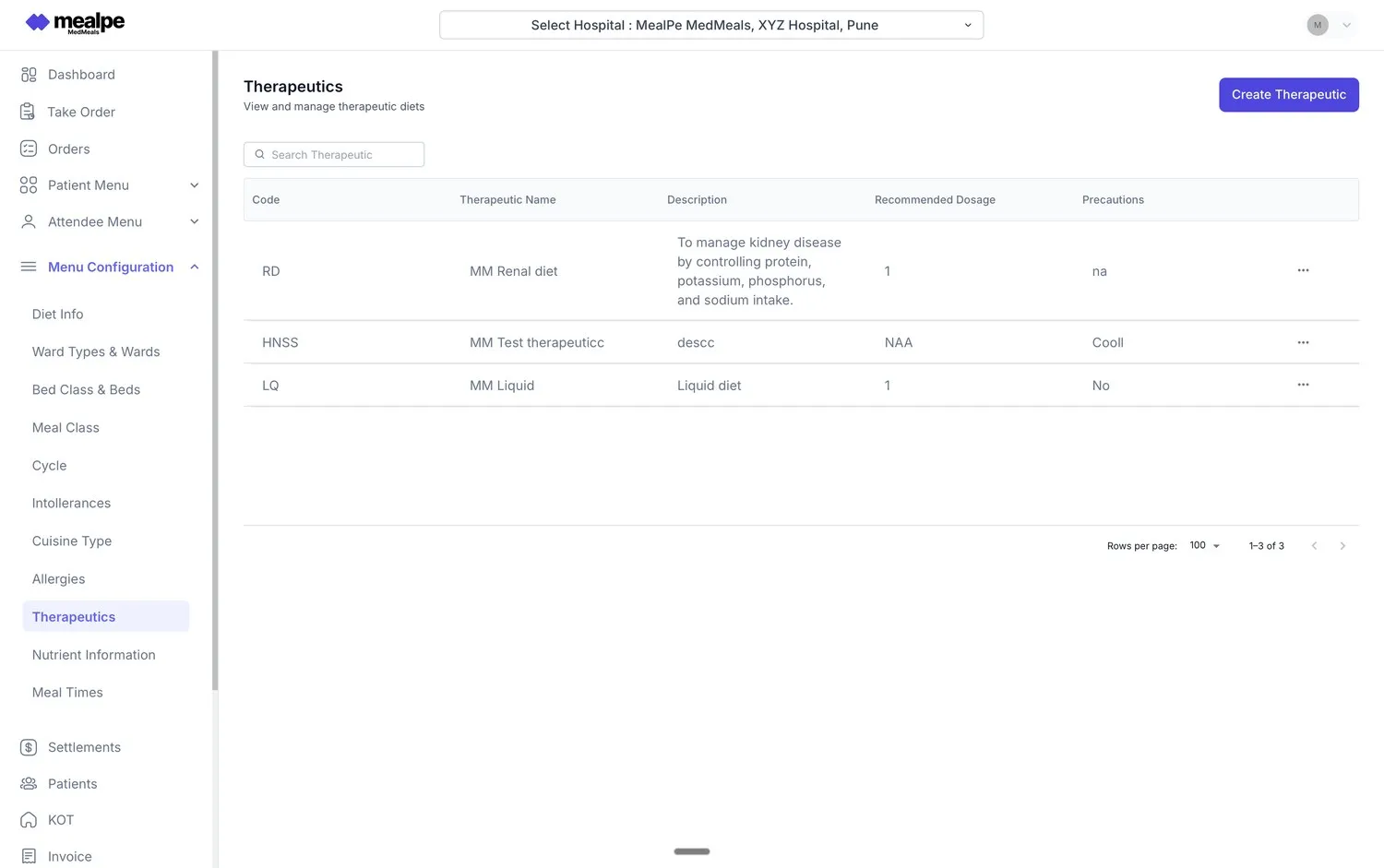
Each therapeutic diet is written down once, in the therapeutics master, with what it is for and the precautions that go with it. Every ward, kitchen and ordering channel reads that same definition, so a cardiac diet means the same thing in the ICU as on the general ward.

  • Diets defined once by your clinical team
  • Precautions stored with each diet
  • The same rules on every channel
Therapeutics master
Therapeutics master in MedMeals listing renal, liquid and other therapeutic diets with descriptions, dosage and precautions

Therapeutics master with diet descriptions and precautions

Evidence from the ward, captured at the bed

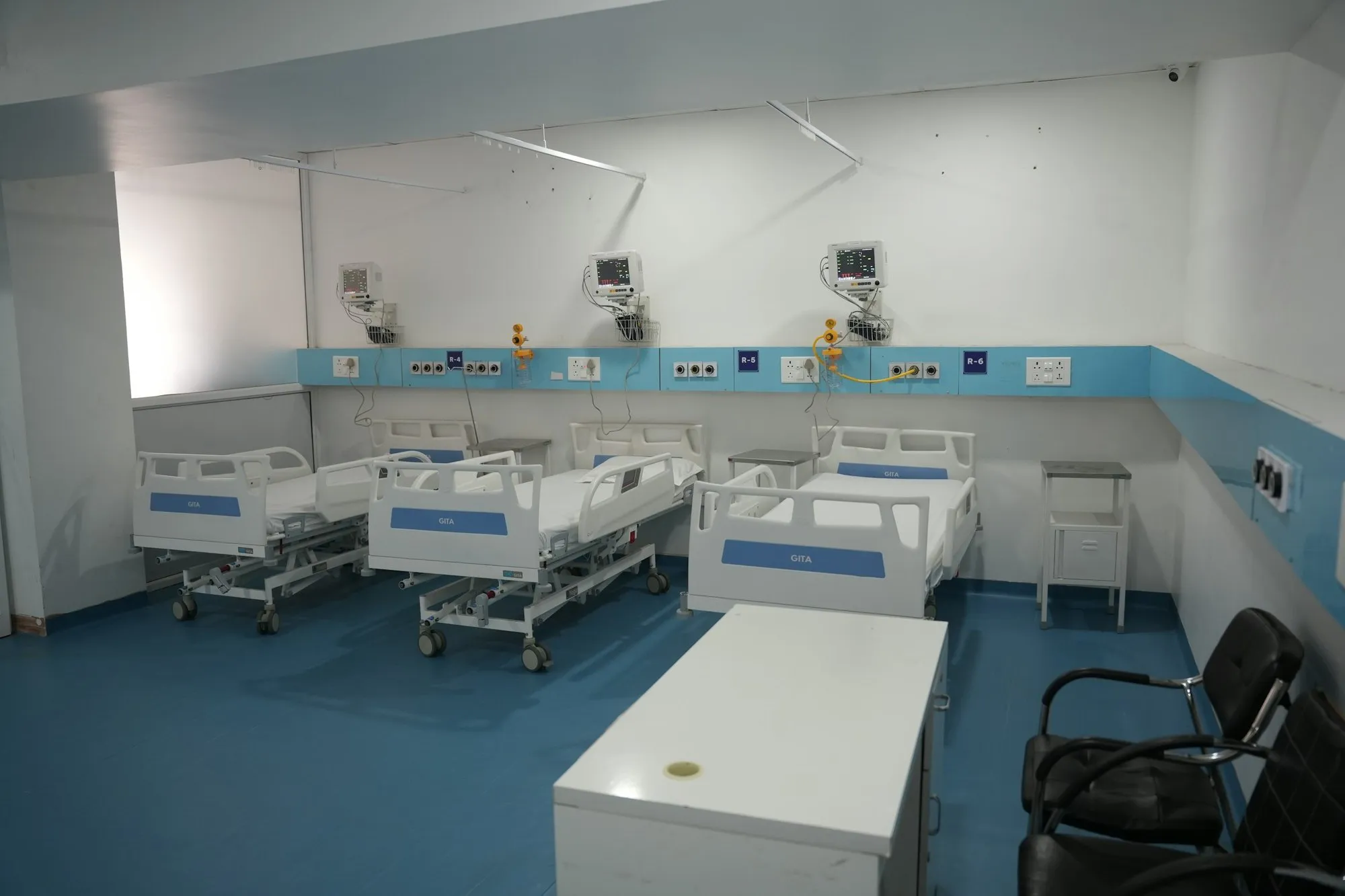
The strongest audit evidence is recorded when the work happens. Delivery and clearance OTPs are entered at the bedside, and each scan and status change is logged with its time, so the record shows what happened on the ward rather than what someone remembered later.

  • Delivery OTP at handover
  • Clearance OTP when the tray is collected
  • Status changes logged as they happen
Clean multi-bed hospital ward in India with made-up beds and wall-mounted monitors

Meals verified on the ward, not reconstructed later

Audit preparation on paper versus MedMeals

Paper versus MedMeals
Audit preparation on paper versus MedMeals
Area On paper With MedMeals
Diet orders Copied between case file, diet register and kitchen slip Recorded once on the patient's record, with history
Diet changes Phoned through and rarely written down Logged and alerted to kitchen and nursing
Allergies Noted in the file, not always on the tray Removed from the patient's menu before anyone can order
Delivery Assumed, not recorded Confirmed by OTP at the bed
Access Registers anyone on the floor can write in Role-based access with full audit logs
Audit evidence Registers pulled and reconciled by hand Logs and reports exported by ward, diet or period

What changes before the next assessment

  • A complete digital audit trail

    From diet order to tray clearance, every dietary step is logged in one system and can be exported on request.

  • 100% diet compliance

    A meal that breaks the diet order cannot be ordered in the first place, because it never appears on that patient's menu.

  • Fewer meal-service errors

    The diet travels with the order instead of being copied by hand, which removes the copying steps where tray mistakes creep in.

Questions buyers ask

Still have a question? Ask our team or call +91 79845 98296.

What does NABH expect from hospital dietary services?

In general terms, NABH expects the diet to follow the treating doctor's order, patients to be screened for nutritional risk and assessed by a qualified dietitian where required, therapeutic diets to be planned and provided collaboratively, food to be handled safely, and each step to be documented. Your quality team should confirm the details against the current edition of the NABH standards.

What are the NABH guidelines for a hospital kitchen?

The standards touch the hospital kitchen in more than one place. Infection control expectations cover kitchen sanitation and safe food handling, while the Care of Patients chapter covers therapeutic diets planned and provided for each patient. MedMeals supports the diet side: what was ordered, prepared, delivered and cleared, and for whom. Hygiene and food safety records stay with your kitchen and infection control processes, and the current standards remain the reference for the full requirements.

Which NABH chapter covers nutrition and diet?

NABH's accreditation standards address nutritional therapy in the Care of Patients chapter, including nutritional screening, assessment of patients found at risk and collaborative planning of therapeutic diets. Diet education for patients and families, and kitchen sanitation and food handling, are addressed elsewhere in the standards.

Is MedMeals enough on its own to meet NABH dietary requirements?

No. NABH accredits hospitals after assessing how they deliver care, and no software can meet the standards on a hospital's behalf. What MedMeals provides is the dietary evidence: a logged, exportable record of diet orders, changes, deliveries and clearances that supports your NABH documentation.

What dietary records can MedMeals export for an audit?

Exportable audit logs cover orders, diet changes, deliveries, clearances and billing transactions. Meal reports add diet compliance, consumption and meals served, broken down by ward, diet or period, and each patient's record keeps the full diet and meal history.

Does MedMeals record nutritional screening and assessment?

Not as clinical forms. Your dietitians screen and assess patients with the tools your hospital has adopted, and those records stay in your clinical documentation. MedMeals picks up from there: it records the diet that results, applies it to every meal and keeps the history.

How does MedMeals show that the right meal reached the right patient?

Through the order's own record. Kitchen and delivery staff scan its QR code as it moves, the handover at the bed is confirmed with a delivery OTP, and tray clearance with a second OTP. Each of those events is logged against the order and the patient.

Can we control who is allowed to change a diet order?

Yes. Roles and permissions are set for dietitian, kitchen, nursing, admin and billing teams, so only the roles you choose can change a diet, and full audit logs show every change.

See the dietary audit trail MedMeals keeps

Book a demo with your quality team. We will walk through the logs and reports MedMeals produces and how they fit your NABH documentation.

Demo request Reply within one working day

Request a personalized demo

Your role (tick one)

We will only use your details to arrange the demo. See the privacy policy.