Nutrition record Bed 14, Medical ward

Patient nutrition management software that follows every inpatient meal

MedMeals connects the dietitian's plan to what each patient is actually served. Menus carry nutrient values, therapeutic diets decide what can be ordered, and meal reports show your clinical nutrition team which patients need a closer look.

Diet
Diabetic, soft texture
Nutrients
Calories, protein, sodium
Meals today
2 delivered, 1 held
Next review
Dietitian round, 10:00

Without intake visibility, at-risk patients go unnoticed

In many hospitals, clinical nutrition stops at the plan. The dietitian assesses the patient and writes a diet, and then the record goes quiet. Whether the meals that followed matched the plan, arrived on time or were held for a procedure lives in kitchen slips and ward registers that nobody reads together.

On paper, a patient who has gone two days without a proper meal looks the same as one who received every tray. By the time the gap surfaces on rounds, days of nutrition have already been lost.

The food itself is often a guess as well. Without nutrient values on each item, a dietitian cannot check whether the menu a patient orders from actually meets the diet order.

Nutrition care your whole team can see

MedMeals is the meal side of clinical nutrition. Your dietitians keep the clinical judgment. The system makes sure their plan reaches the tray and shows them what happened next.

  • Menus built on nutrient values

    Record calories, protein, carbohydrates, sodium and more against every menu item. Dietitians plan from real values and can see what a meal contains before it is served.

  • Therapeutic diets that shape every order

    Renal, cardiac, diabetic, liquid and the other diets your protocols define decide what each patient can order. Items that break the diet or contain a recorded allergen are never offered.

  • A meal history for every patient

    Every order, delivery, tray clearance and held meal stays on the patient's record from admission to discharge, so the plan and what actually happened can be read side by side.

  • Consumption and diet-compliance reports

    Meal reports cover consumption, diet compliance and meals served by ward, diet or period, so the nutrition team sees patterns across the hospital instead of one register at a time.

  • A dietitian assigned at admission

    Patients are onboarded manually or through HIMS sync, with a dietitian assigned and the diet set up from the start, so no admission waits for someone to notice it.

  • Plan changes that reach the kitchen

    When the dietitian revises a plan on rounds, the kitchen and nursing get a real-time alert and the next order follows the new diet.

  • Plans that survive transfers

    When a patient moves from ICU to a ward, the diet profile moves too, so the nutrition plan does not restart with every bed change.

The nutrition care loop, closed

Plan, serve, review, adjust. MedMeals keeps each step on one patient record, so the loop does not break between the dietitian's notes and the kitchen.

  1. Step 1: Assign

    A new admission arrives from HIMS or the admission desk, is assigned to a dietitian and carries the treating doctor's diet order.

  2. Step 2: Plan

    After assessment, the dietitian sets the diet, texture, allergies and diet cycle on the record. The clinical decisions stay with the dietitian and the treating doctor.

  3. Step 3: Serve

    Staff order at the bedside and families order online, choosing only from items that fit the plan. Delivery and tray clearance are confirmed by OTP.

  4. Step 4: Review

    Each patient's meal history shows which meals were delivered, held or never ordered, and meal reports show consumption and compliance across the ward.

  5. Step 5: Adjust

    The dietitian follows up on the next round and updates the plan. The kitchen and ward are alerted, and the next meal follows it.

Nutrient values the menu can use

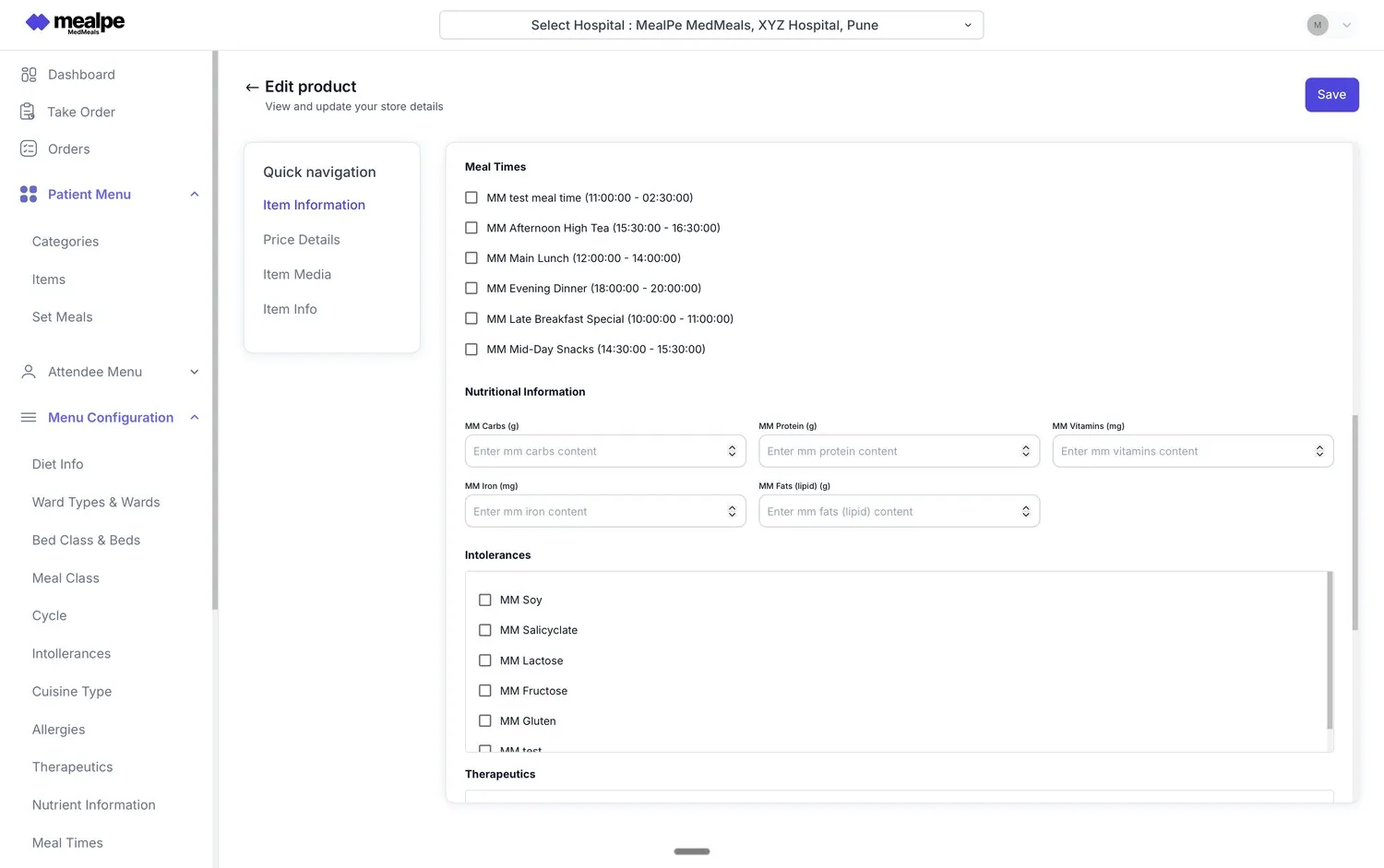
Each patient menu item holds its nutritional values, meal times, intolerances and the therapeutic diets it suits. Dietitians enter this once, and every patient menu built from it inherits the data, so nutrition lives inside the menu rather than in a separate spreadsheet.

  • Calories, protein, carbohydrates, sodium and more
  • Intolerances recorded against each item
  • Therapeutic diets tagged per item
Patient menu configuration
Patient menu item editor in MedMeals with meal times, nutritional information, intolerances and therapeutics

Nutritional values on a patient menu item
Rounds that start with the meal record

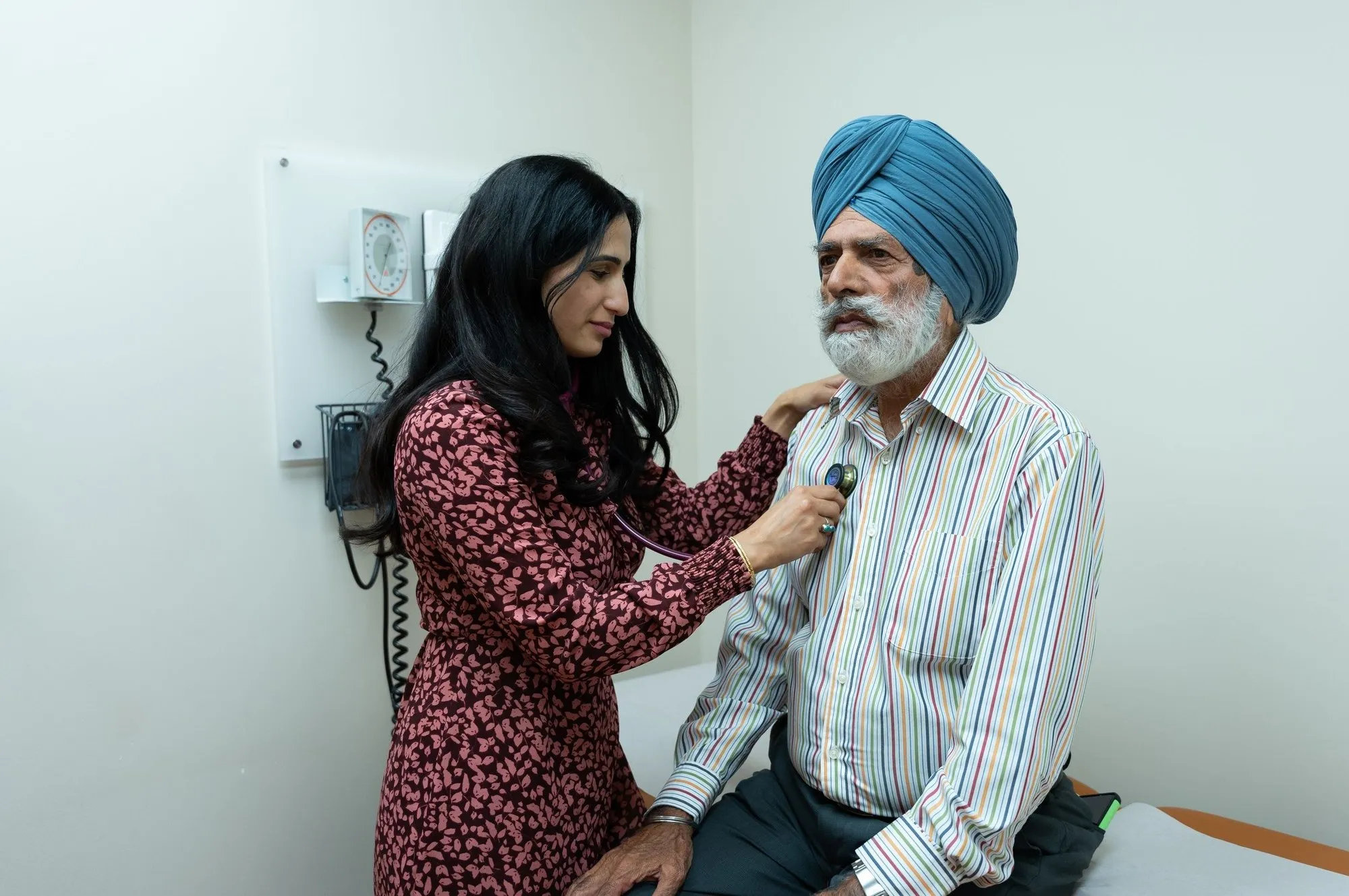
Before a round, the dietitian can see each patient's meals: what was ordered, what was delivered and what was held. The conversation at the bedside starts from facts, and any change made there reaches the kitchen before the next meal.

  • Meal history kept from admission to discharge
  • Plan changes alert kitchen and nursing in real time
  • Clinical decisions stay with the treating team
Doctor listening with a stethoscope to an elderly patient in an examination room

Bedside decisions, backed by the meal record

Patient nutrition on paper versus MedMeals

Paper versus MedMeals
Patient nutrition on paper versus MedMeals
Area On paper With MedMeals
Nutrition plan Written in the case file, then paraphrased on a kitchen slip Recorded once and applied to every menu the patient sees
Nutrient data Estimated from the dish name, if at all Stored per item, from calories to sodium
Meals received Unknown until someone asks the ward A meal history with every order, delivery and hold
Hospital-wide view Tallied by hand from registers at month end Consumption and compliance reports by ward, diet or period
Plan change Waits for the next slip to reach the kitchen Real-time alert to kitchen and nursing
Dietitian handover Depends on notes and memory One patient record every dietitian can read

What changes when nutrition has data behind it

  • 100% diet compliance

    Unsafe items are hidden from each patient's menu, so every meal a patient can order already fits the plan the dietitian set.

  • Fewer meal-service errors

    One record from plan to tray replaces the copies where diets drift, so fewer patients receive a meal that was never meant for them.

  • Gaps noticed on the next round

    Because every order and held meal sits on the patient's record, a gap in someone's meals is visible on the next round instead of the next week.

  • A complete nutrition trail

    Diet orders, plan changes and every meal served are logged, giving the team a digital record for NABH and internal audits.

Questions buyers ask

Still have a question? Ask our team or call +91 79845 98296.

What is patient nutrition management software?

Patient nutrition management software helps a hospital plan, deliver and review inpatient nutrition. In MedMeals that means nutrient values on every menu item, therapeutic diets applied to each patient's menu, a meal history for every patient, and consumption and diet-compliance reports for the clinical nutrition team.

How is patient nutrition management different from diet management software?

Diet management is the rules engine: it turns a diet order into what a patient can and cannot order. Patient nutrition management is the loop around it: the nutrient data behind the menu, the meal record after each order and the reports a dietitian uses to follow up. MedMeals does both on one patient record.

Does MedMeals screen patients for malnutrition?

No. Nutrition screening and assessment are clinical work, done by your dietitians and clinical team with the tools and forms your hospital uses. MedMeals records the diet they set, applies it to every meal and gives them the meal and consumption data to follow up on.

Can dietitians see whether a patient is receiving their meals?

Yes. Each patient's meal history shows every order and its status through delivery and tray clearance, along with any meals that were held. Meal reports add consumption, diet compliance and meals served by ward, diet or period.

Which nutrients can be recorded for each menu item?

Calories, protein, carbohydrates, sodium and more can be stored against each item, alongside its meal times, intolerances and the therapeutic diets it suits.

Is MedMeals clinical nutrition software?

MedMeals covers the food side of clinical nutrition in a hospital: diets, menus, meals and the records around them. It does not replace the dietitian's assessment or the treating doctor's orders. It makes sure they reach the tray and shows what happened next.

See the nutrition loop with your own diets

Book a demo and bring a typical ward and your diet list. We will show how plans, meals and reports connect for your dietitians.

Demo request Reply within one working day

Request a personalized demo

Your role (tick one)

We will only use your details to arrange the demo. See the privacy policy.