IDDSI levels explained: texture-modified diets for hospital kitchens
IDDSI's eight levels give thickened drinks and texture-modified foods one set of numbers, names, colors and tests. Here is each level, how kitchens test them with a syringe, fork and spoon, Indian menu examples, and how to run IDDSI every day.
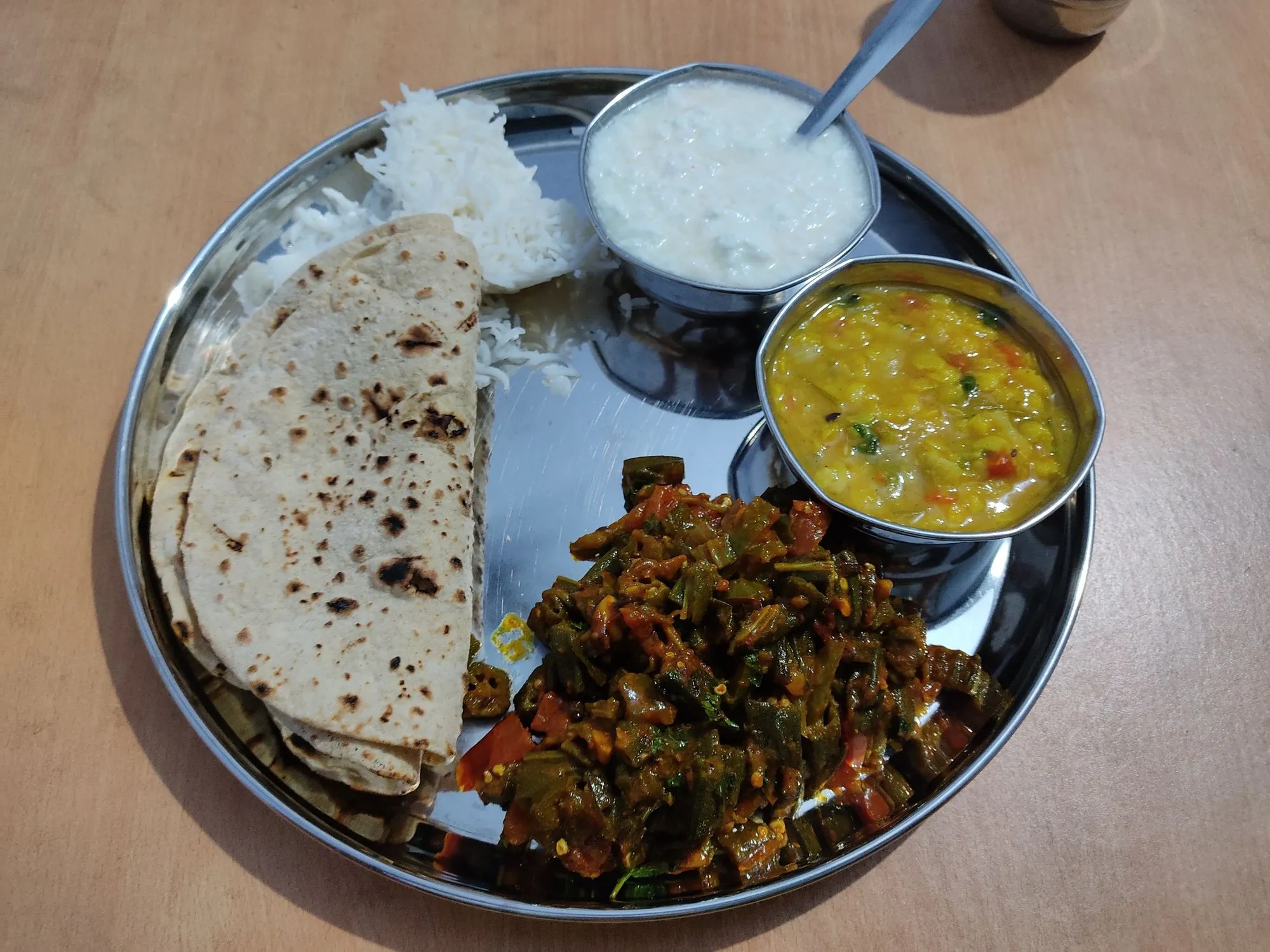
IDDSI levels are the eight standard levels, numbered 0 to 7, that the International Dysphagia Diet Standardisation Initiative uses to describe drink thickness (Levels 0 to 4) and food texture (Levels 3 to 7) for people with swallowing difficulty. Each level has a number, a name, a color and a simple test using a syringe, fork or spoon. A speech-language pathologist or the treating clinician chooses a patient’s level; the kitchen’s job is to produce it the same way every time.
What is the IDDSI framework?
IDDSI was founded in 2013 to replace the many national terms for texture-modified foods and thickened drinks with one international standard, for people of all ages, in all care settings and all cultures. It released its framework in 2016, described in the journal Dysphagia in 2017, and a July 2019 update added Level 7 Easy to Chew as a sub-level of Level 7 Regular (IDDSI history). The current detailed level definitions are version 2.2, from 2026. For a one-line definition, see the IDDSI glossary entry.
The problem it solves is large. Cichero and colleagues estimate that dysphagia affects about 8% of the world’s population, around 590 million people. The ESPEN guideline on hospital nutrition notes that differing names, numbers of levels and characteristics within and across countries all increase the risk to patient safety.
Adoption has followed. ESPEN reports that since October 2021 the Academy of Nutrition and Dietetics has recognized only IDDSI in its Nutrition Care Manual. ASHA, the Academy and the Association of Nutrition and Foodservice Professionals have supported IDDSI since its US launch in May 2019, and SNOMED International agreed in 2022 to bring IDDSI Framework content into SNOMED CT for electronic health records.
The IDDSI levels at a glance
| Level and code | Drinks | Foods | Color | What it is | Test |
|---|---|---|---|---|---|
| 0 (TN0) | Thin | White | Flows like water through any cup, straw or teat | Flow test: less than 1 ml left after 10 seconds | |
| 1 (ST1) | Slightly Thick | Gray | Thicker than water, still flows through a standard straw or teat | Flow test: 1 to 4 ml left | |
| 2 (MT2) | Mildly Thick | Pink | Sippable, pours quickly from a spoon, mild effort through a standard straw | Flow test: 4 to 8 ml left | |
| 3 (MO3, LQ3) | Moderately Thick | Liquidised | Yellow | Drunk from a cup or eaten with a spoon, not a fork; smooth, no bits | Flow test: more than 8 ml left; drips slowly in dollops through a fork |
| 4 (EX4, PU4) | Extremely Thick | Pureed | Green | Usually eaten with a spoon; holds its shape; no lumps, not sticky, no chewing | Fork drip and spoon tilt tests |
| 5 (MM5) | Minced and Moist | Orange | Soft, moist, small lumps: for adults no wider than 4 mm and no longer than 15 mm | Fork pressure, fork drip and spoon tilt tests | |
| 6 (SB6) | Soft and Bite-Sized | Blue | Soft, tender, moist pieces no bigger than 1.5 cm by 1.5 cm for adults; chewing needed | Fork pressure test to thumbnail blanching | |
| 7 (EC7, RG7) | Easy to Chew, Regular | Black | Everyday foods: soft and tender only (Easy to Chew) or any texture (Regular) | Fork pressure test for Easy to Chew; none for Regular |
Levels 3 and 4 are where drinks and foods overlap: a Moderately Thick drink and a Liquidised food share one description and one set of tests, as do Extremely Thick and Pureed. For children, the Level 5 lump limit is 2 mm wide and 8 mm long, and the Level 6 piece size is 8 mm.
IDDSI also defines transitional foods: foods that start firm and change texture when moisture or heat is applied, such as wafers, some biscuits and ice chips. They need minimal chewing and can be used to teach or rebuild chewing skills. The test is to place 1 ml of water on a 1.5 cm sample, wait one minute, then press with a fork until the thumbnail blanches; a transitional food squashes or melts and no longer looks like it did.
How IDDSI testing works
IDDSI’s rule is simple: the descriptions help, but the tests decide the level. Test food and drinks as they will be served, especially at serving temperature, because thickness changes with temperature (IDDSI testing methods).
The flow test for drinks
The IDDSI Flow Test measures how much of a 10 ml sample is left after 10 seconds of flow under gravity. Kitchens can use a standard 10 ml slip-tip syringe, after checking that its 10 ml scale measures 61.5 mm because syringe lengths vary, or the purpose-made IDDSI Funnel shown on IDDSI’s 2024 testing poster. In a 2024 validation study, Steele and colleagues found that the funnel’s level classification agreed completely with the reference syringe for 92% of the fluids and temperatures tested.
Fork and spoon tests for foods
- Fork drip test (Levels 3 to 5). Scoop the sample on a fork. Level 3 drips slowly in dollops through the prongs, Level 4 sits in a mound above them, and Level 5 holds together without falling through.
- Spoon tilt test (Levels 3 to 5). Level 3 pours easily off a tilted spoon. At Levels 4 and 5, a spoonful should hold its shape, then slide off easily when the spoon is tilted, leaving little behind. Food that sticks to the spoon is too sticky, which raises the risk of residue in the mouth and throat.
- Fork pressure test (Levels 4 to 7 and transitional foods). Press a thumbnail-sized sample with a fork until the thumbnail blanches white. IDDSI measured that pressure at about 17 kPa, consistent with tongue force during swallowing. At Level 6 and Easy to Chew the sample should squash and not return to its shape. At Level 5 it should mash with very little pressure, and its particles should pass between the prongs of a standard fork, which are about 4 mm apart.
Where forks are not used, IDDSI adds chopstick and finger tests.
IDDSI levels on an Indian hospital menu
IDDSI’s food examples are international, so Indian kitchens have to translate them. Treat the examples below as starting points to test, not guarantees.
- Drinks (Levels 0 to 4). Everyday drinks such as water, tea and thin buttermilk are likely to test as thin (Level 0); the flow test confirms it. For patients who need thicker drinks, a thickener is added to reach the level the speech-language pathologist has set, and each batch is checked with the flow test.
- Liquidised and Pureed (Levels 3 and 4). Dal, khichdi, vegetables and soft-cooked meat can be blended smooth and adjusted until they pass. Level 4 must hold its shape on a spoon, must not separate into liquid and solid, and must not be sticky. Starchy rice purees can turn gluey, which is exactly what the spoon tilt test catches.
- Minced and Moist (Level 5). Finely minced vegetables or meat in a thick, smooth gravy, with excess liquid drained. IDDSI’s guidance is that rice should not be sticky, should not separate into individual grains, and should be served with a smooth, thick sauce that does not separate from it.
- Soft and Bite-Sized (Level 6). Soft-cooked vegetables, tender meat or fish and soft fruit in pieces no bigger than 1.5 cm, moist throughout. IDDSI’s adult handout warns that stir-fried vegetables are too firm, and lists mixed thin-and-thick textures, such as soup with pieces of food or cereal with milk, among the foods to avoid. On an Indian menu, a sambar with vegetable pieces falls into that category.
- Easy to Chew (Level 7). Everyday soft, tender food without hard, tough, chewy, fibrous, stringy, crunchy or crumbly bits, pips, seeds, husks or bones. On an Indian menu those categories catch papad and fried namkeen, peanuts in poha, fish with small bones and fibrous drumstick pieces.
IDDSI excludes regular dry bread at Levels 5 and 6. Agree with the speech-language pathologist whether and how roti or pav can be adapted, and test the result before it goes on the menu.
Running IDDSI in a hospital kitchen
- Map your current diet names. The IDDSI United States reference group advises mapping each existing diet name to an IDDSI level and confirming it with IDDSI’s tests. Older terms map only roughly: nectar-thick is similar to Level 2, honey-thick to Level 3 and pudding-thick to Level 4, and the old “mechanically altered” diet does not map neatly to Level 5 or 6. Our guide to types of hospital diets covers the older names, including the mechanical soft diet.
- Offer only the levels you can produce safely. Each organization decides which levels to adopt. The French dietetic and clinical nutrition societies, AFDN and SFNCM, note that hospitals need not offer every level, but should name what they do offer by the IDDSI classification.
- Standardize and test recipes. Write each recipe for a level, test it at serving temperature and record the result in the diet kitchen.
- Train the people who cook and serve. In five aged-care facilities studied by Wu and colleagues, the share of texture-modified meals that met IDDSI standards rose from 44% (30 of 68) to 90% (71 of 79) after tailored support that included dietitian-led staff training.
- Label every step. Put the IDDSI number, name and color on the diet order, the meal card and the tray. IDDSI’s short codes, such as MM5 or SB6, fit on any label.
- Watch energy and protein. ESPEN notes that texture-modified diets often supply less energy, partly because bread and many dishes drop off the menu, so dietitians plan fortification.
- Close the loop on errors. A Queensland team led by Hopper targeted patients and families, staff and the organization, and saw dietary clinical incidents fall by half, with a 2.3% meal accuracy error rate in mealtime audits afterwards.
How a digital system like MedMeals helps
MedMeals does not test textures; your kitchen still runs IDDSI’s syringe, fork and spoon tests. What it does is carry the level from the diet order to the tray. Hospitals set up IDDSI levels as their own custom diet labels, so the level travels with the patient’s diet to the bedside tablet, the meal card and the KOT. Menus show each patient only the items suitable for their diet, with allergies and intolerances hidden. When the speech-language pathologist or dietitian changes a level, future orders follow it and the kitchen and nursing get a real-time diet-change alert. Meal reports on consumption and diet compliance help the dietitian spot patients on texture-modified diets who may be eating too little.
See diet management and kitchen management, or book a demo to see IDDSI levels set up as diet labels for your wards.
Sources
- IDDSI: The IDDSI framework
- IDDSI: Complete IDDSI Framework detailed definitions, version 2.2 (2026)
- IDDSI: Testing methods, version 2.0 (2019)
- IDDSI: Food and drinks classification and testing poster (2024)
- IDDSI: Our story (history of the initiative)
- IDDSI: Level 6 Soft and Bite-Sized for adults (consumer handout)
- Cichero et al.: Development of international terminology and definitions for texture-modified foods and thickened fluids used in dysphagia management, the IDDSI framework (Dysphagia, 2017)
- Steele et al.: Validation of the IDDSI funnel for liquid flow testing (Journal of Texture Studies, 2024)
- IDDSI United States Reference Group: How to ease IDDSI implementation (March 2025)
- ESPEN guideline on hospital nutrition (Thibault et al., Clinical Nutrition, 2021)
- Guidelines on standard and therapeutic diets for adults in hospitals by AFDN and SFNCM (Vaillant et al., Nutrients, 2021)
- SNOMED International: SNOMED International and IDDSI join forces (2022)
- ASHA: International Dysphagia Diet Standardisation Initiative (IDDSI)
- Wu, Miles and Braakhuis: The effectiveness of IDDSI-tailored interventions on staff knowledge and texture-modified diet compliance in aged care facilities (Current Developments in Nutrition, 2022)
- Hopper et al.: Improving accuracy of texture-modified diets and thickened fluids provision in the hospital (Dysphagia, 2022)
This guide is general information for hospital teams and is not medical advice. Diets are prescribed and adjusted by the treating doctor or a qualified dietitian.